How to play off the back wall in padel
The back glass is what makes padel padel, and it is where most club points are won or thrown away. Here is how to read the rebound, where to stand, and what to hit once the ball comes back to you.
Let the ball bounce, let it come off the glass, then hit it as it drops in front of you. Under the FIP rules the ball has to bounce on your floor first; after that it can hit your back glass, side glass or mesh and you can still play it before a second bounce. Turn side-on as soon as you see the ball is going deep, move back with it instead of waiting at the glass, stay low, and give yourself about a racket’s length of space from the wall. From back there, a high, deep lob is usually a better reply than a hard drive.
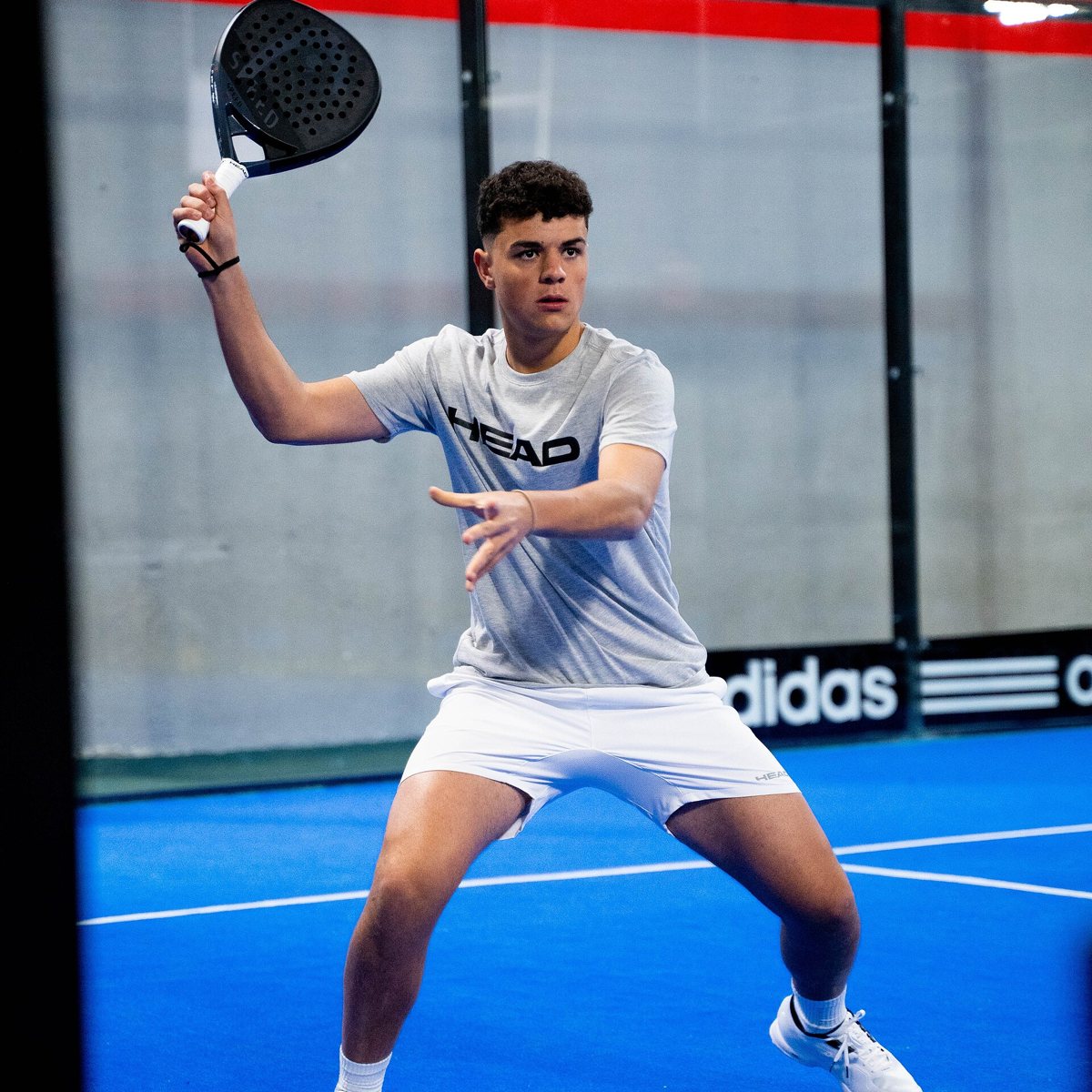
What the rules actually allow
Most arguments about the walls come down to order. The FIP Rules of Padel say the ball must land on the receiving side’s floor before it touches anything else on that side. Once it has bounced, it stays in play off any combination of glass and mesh until it bounces a second time. So a ball that bounces, hits the back glass, then the side glass, is still yours to play. A ball that hits your glass on the full, without bouncing, was out. Our padel rules guide covers the rest of the rulebook.
When you are the one hitting, you may also use your own glass. A return that strikes a wall on your own side and then bounces in the opponents’ court is good. Two limits apply: the ball must not touch your own metal mesh or your own floor after you hit it, and it must land on the opponents’ floor before touching their walls.
Why the back wall matters so much
In tennis, a deep ball pushes you back until you run out of court. In padel the court ends at the glass, and the glass gives the ball back. That changes the defensive job. You are not trying to reach every ball before it gets deep; you are trying to be in the right place when it comes off the wall. The rebound is slower than the original shot, and it sits up in front of you, which buys time to play a controlled reply.
That is why coaches spend so much time on the back wall with new players. The two most common beginner habits, backing away from the glass and refusing to let the ball reach it, or rushing forward to hit before the bounce, both throw away that extra time. We list it as one of the most common beginner mistakes for a reason.
Step by step: the basic back-wall rebound
- Read depth early. As the opponent hits, decide whether the ball will bounce deep enough to reach your back glass. Height and pace are the clues: a fast, flat ball or a lob that clears your partner is usually going to the wall.
- Turn side-on. Pivot so your shoulder, not your chest, faces the net. On the forehand side your non-hitting shoulder points toward the net; on the backhand, your hitting shoulder does. Turning first is what lets you move back quickly without backpedaling.
- Move back with the ball. Use small side steps or crossover steps toward the glass. You want to arrive about a racket’s length from the wall, not pressed against it, so the ball has room to rebound out to you.
- Prepare the racket early and stay low. Racket back, knees bent. The rebound usually drops as it comes off the glass, so you need to be ready to hit low.
- Let it pass you, then step in. Let the ball go past your body, hit the glass and come back. As it comes out, step toward the net and hit it in front of you as it drops.
- Choose a safe target. From the back of the court, a high, deep lob over the net players or a soft, low ball to their feet is usually better than a hard drive that comes straight back at you.
The common back-wall situations
Straight off the back glass
The easiest version. The ball bounces, hits the back glass square and comes straight out. Use the basic sequence above. The mistake here is standing too close and getting jammed.
Off the side glass only
A ball angled toward the side bounces and runs along or off the side wall. Here you usually move sideways rather than back, and the rebound comes across your body. Stay a little farther from the side glass than you think you need to.
Back glass, then side glass (the corner)
The hardest one at club level. The ball bounces, hits the back glass, then the side glass, and changes direction twice. Wait longer than feels natural and track the ball all the way out of the corner. Hitting before the second wall contact is the classic error.
Side glass, then back glass
The reverse: the ball comes off the side wall first and then the back. It tends to come out closer to the middle of the court. Again, patience; let it finish moving.
A lob over your head
If you cannot reach a lob with an overhead, turn and chase it toward the back. If it bounces and comes off the glass high enough, you can play it as a rebound. If it beats you, the contrapared below is the emergency option.
You can’t learn the back wall without glass. Book a court for 30 minutes with a partner and a bucket of balls, or join a beginner clinic where a coach feeds rebounds.
Find padel courts near youThe contrapared: your emergency exit
Sometimes the ball gets behind you and there is no time to let it come back off the glass. The contrapared is the escape: you hit the ball backward into your own back glass, hard and with an upward swing, so it rebounds up and over the net. It is legal as long as the ball does not touch your own mesh or floor and lands in the opponents’ court before touching their walls. Treat it as a last resort. It rarely wins a point outright, and a contrapared that drops short sits up for an easy smash. Most coaches teach it after the basic rebound is reliable.
The bajada: attacking off the wall
When a high ball bounces and comes off the back glass with plenty of height, you can let it rise and come back down, then hit it at around shoulder height as it drops. That shot is called the bajada (from the Spanish for “coming down”). It turns a defensive position into an attacking one, usually aimed at the opponents’ feet or into the space between them. It is an intermediate shot. Our guide to padel shots covers the bandeja, the víbora and the other overheads it is often confused with.
Five mistakes that cost points off the wall
- Standing on the glass. No room for the rebound means a cramped, late swing.
- Facing the net square-on. You can’t move back quickly or swing freely without turning.
- Hitting before the ball finishes moving. Especially out of corners, wait for the second wall.
- Swinging hard from the back. A hard drive from deep usually comes straight back as a volley.
- Watching your partner instead of the ball. Call “mine” or “yours” early and commit.
Drills to build the rebound
Start slow. Every drill below works with one feeder and a bucket of balls. Our padel drills for beginners has a full weekly plan.
- Self-feed off the back glass. Stand near the service line, throw the ball so it bounces and comes off the back glass, then turn, move back and hit a lob over the net. Twenty balls each side.
- Partner feed, back wall only. Your partner feeds from the other side of the net, deep enough to reach your back glass. Focus only on the turn and the distance from the wall.
- Corner feed. The feeder angles the ball into the back corner. Let it touch both walls before you hit.
- Lob-and-recover. The feeder lobs over you. Turn, chase and play it off the glass or with a contrapared, then recover to the net together with your partner.
In matches, coordinating who takes the ball off the wall is half the battle. See padel doubles strategy for positioning as a pair.
Does your racket matter for wall play?
Some. Rebound balls are played from awkward, low positions, often off-center. A forgiving racket with a larger sweet spot and a balance toward the handle is easier to control there than a head-heavy diamond shape built for smashes. If you are still learning the walls, look at the round and teardrop shapes in our racket shapes guide.
Control beats power off the back glass. Compare forgiving, control-first rackets before your next session.
Frequently asked questions
Are you allowed to let the ball hit the back wall in padel?
Yes, once it has bounced. Under the FIP Rules of Padel, the ball must bounce on your floor first; after that it may come off your back glass, side glass or mesh and you can still play it, as long as you return it before it bounces a second time. If the ball hits your wall before bouncing on your floor, it was out and the point is yours.
How do you hit the ball after it comes off the back wall?
Turn side-on early, move back toward the glass with the ball, and let it pass you. Stay low, keep the racket prepared, and hit as the rebound drops in front of you at roughly waist height or lower. Most players aim the return high and deep, usually a lob, rather than trying to hit hard from the back of the court.
Can you hit the ball into your own wall to get it back over the net?
Yes, into your own glass. The FIP rules allow a return that strikes a wall on your own side and then bounces in the opponents’ court. This is usually called the contrapared. Hitting your own metal mesh, or letting the ball bounce on your side again, loses the point, and the ball must not hit the opponents’ walls before it bounces on their floor.
Why do I keep getting too close to the back glass?
Usually because you move back late and then rush, or you stop with your back to the glass instead of side-on. Leave at least a racket’s length between you and the glass when the ball arrives, start moving back as soon as you see the ball is going deep, and let the rebound come off the wall toward you.
Should beginners let the ball hit the back wall or volley it?
When the ball is deep and fast, letting it come off the glass is often the safer play because the wall slows it down and buys time. Many beginners back away from the wall or rush forward to hit before the bounce and lose easy points. Learning the rebound is one of the first skills most coaches teach.
What is a bajada in padel?
A bajada is an attacking shot played after a high ball has bounced and come off the back glass: you let it rise and come back down, then hit it at around shoulder height as it drops, usually aiming to put pressure on the opponents at the net. It is an intermediate shot; reliable defensive rebounds come first.
Sources
- International Padel Federation (FIP). Rules of Padel, edition in force from January 1, 2026: ball in play after the bounce, returns off the player’s own walls, and points lost off one’s own mesh or the opponents’ walls.
- Technique sections reflect standard coaching practice; no performance statistics are claimed.