Padel racket protector: do you need one?
A strip of tape on the top of the frame sounds like a small thing. Here is what it actually protects, what it does to weight and balance, what the rules say, and how to fit one properly.
A padel racket protector is an adhesive strip that wraps over the top edge of the frame, where rackets scrape the floor and glass. It’s allowed under FIP rules, which permit additions used to prevent deterioration as long as they’re reasonable in size and position. It adds a few grams to the head: Palbea lists its protector at 7 g, and one retailer describes typical protectors as 5–15 g. That moves the balance point a few millimetres toward the head. If you dig balls out of corners and play off the glass a lot, fit one. If you want the lightest head possible and rarely touch the walls, you can skip it.
Key takeaways
- Protectors take the scrapes and chips that would otherwise land on the top of the frame.
- FIP rules allow attachments that limit deterioration, provided they’re reasonable in size and position.
- Expect a few grams of added weight at the head; check the listing or weigh your racket before and after.
- A 7 g protector shifts balance about 2.5–3.5 mm in our worked example; heavier protectors shift it more.
- Fit it centered, from the middle outward, without stretching; replace it when it lifts or wears through.
- A protector handles scrapes and chips; it doesn’t stop frame cracks from hard impacts or wear on the hitting face.
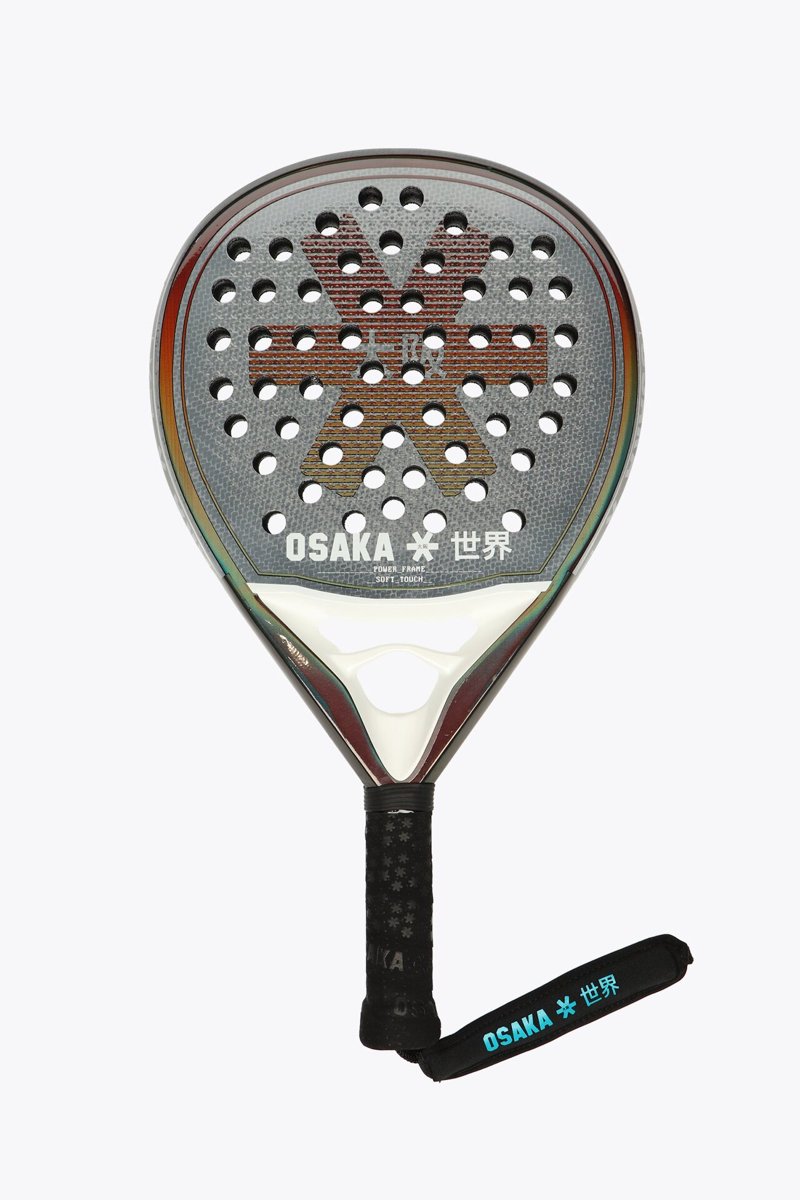
What a padel racket protector actually protects
Padel rackets take a kind of abuse tennis rackets don’t. Low balls in the back corners get scooped up with the racket close to the floor, players defend off the glass with the head near the wall, and partners at the net clash rackets more often than anyone admits. Most of that contact lands on the top of the frame, between roughly ten and two o’clock. Over a season, that is where paint chips, the edge gets scuffed down to the composite, and small dings appear.
A protector is a thin, tough adhesive strip (clear, coloured or branded) that wraps over that arc so the strip takes the scrapes instead. It’s a wear item: when it’s scuffed through, you peel it off and fit a new one, and the frame underneath still looks the way it did. That matters most if you plan to resell or trade in the racket, or if you simply don’t want an expensive frame looking battered after a few months.
What a protector doesn’t do is make a racket unbreakable. A full-speed clash with a partner’s racket, a hard swing into the wall or a racket thrown on the floor can still crack a frame. And wear on the hitting face isn’t something an edge strip can prevent. For how long a racket really lasts and the signs it’s worn out, see how long a padel racket lasts.
Are protectors allowed under the rules?
Yes. The International Padel Federation’s rules of padel say the racket must be free of any objects or devices attached to it that are not specifically used to limit or prevent deterioration, vibration and to distribute the weight, and that such additions must be reasonable in size and positioning. The same rule bars reflective surfaces and sound elements that could disturb other players. A normal frame protector exists precisely to limit deterioration and sits on the frame edge, so it fits comfortably within that wording.
The phrase to keep in mind is “reasonable in size and positioning.” A strip on the frame is fine. Wrapping large amounts of tape around the head, or layering protector on protector until the edge is bulky, stretches the idea. For league or tournament play, the referee or organiser has the final say. The rest of the racket rules, including the 45.5 cm maximum length and the mandatory wrist cord, are in our padel rules guide.
How much weight a protector adds
Weight varies by product and many listings don’t publish it. Two published numbers give a sense of the range: Palbea lists its transparent protector at 7 g, measuring 35 x 370 mm, and the Spanish retailer Tienda Padel Point describes protectors as usually weighing between 5 and 15 g, with lighter and reinforced versions at either end. We haven’t weighed protectors ourselves. If you care about grams, weigh the racket on a kitchen scale before and after fitting; that tells you the real number for your racket and your strip.
What that weight does to balance: a worked example
Balance is the distance from the bottom of the handle to the point where the racket balances, usually given in millimetres. Our weight and balance guide cites a lab study of 137 padel rackets that found a mean weight of 363 g and a mean balance point of 265.5 mm. A protector’s weight sits far above that point, near the top of the head, so it pulls the balance upward.
Here is the simple physics. The new balance point is the weighted average of the racket’s balance point and the protector’s position. A protector wraps around the top arc of the head, so its own centre of mass sits a little below the very tip; for a racket near the 455 mm maximum length, call it somewhere around 400–440 mm from the butt.
| Protector weight | Racket after fitting | Approx. balance shift (from 265.5 mm) |
|---|---|---|
| 5 g | 368 g | about +1.8 to +2.4 mm |
| 7 g | 370 g | about +2.5 to +3.3 mm |
| 10 g | 373 g | about +3.6 to +4.7 mm |
| 15 g | 378 g | about +5.3 to +6.9 mm |
These are back-of-the-envelope estimates for an average racket, not measurements; your racket’s weight, length and shape will move the numbers. To put them in context, retailers commonly describe rackets below about 265 mm as low or head-light, 265–275 mm as even, and above about 275 mm as head-heavy. A light protector nudges a racket a few millimetres along that scale; it won’t turn a control racket into a power racket. But on a racket that’s already head-heavy, the extra weight at the tip adds swing weight you’ll feel in fast exchanges at the net, and players with sore elbows sometimes notice it. If that’s you, choose the lightest protector you can find, or offset it: an extra overgrip adds weight at the handle and pulls the balance back down. Our overgrip guide covers that trade-off.
Shopping for a racket protector?
Look for the listed weight and dimensions, and a width that matches your frame. We haven’t tested any protectors ourselves; the search below shows current options and prices on Amazon.
Who should fit one, and who can skip it
- Fit one if you’re a beginner or improver still learning to play off the glass (the learning curve involves a lot of frame-on-wall contact), you defend from the back corners, you play outdoors on gritty courts, or you’ve just bought a racket you want to keep looking new.
- Consider skipping it if you play mostly at the net, your racket is already head-heavy and you notice small weight changes, or you replace rackets often enough that cosmetic wear doesn’t matter.
- Check first whether your racket already has a protector or a reinforced frame edge fitted; adding a second strip on top just adds weight.
Choosing a racket in the first place? Our racket buying guide walks through shape, balance and weight before you worry about accessories.
How to fit a padel racket protector without bubbles
Fitting takes a few minutes. Follow the instructions on the pack if they differ from these steps.
- Clean the frame. Wipe the top edge to remove dust, sweat and old adhesive, then let it dry. Adhesive won’t bond well to a dirty or damp frame.
- Find the centre. Fold the strip lightly in half or mark its middle, and mark the very top centre of the frame too.
- Line it up before you stick it. Hold the strip against the frame and check that it sits evenly, with the same amount wrapping onto each face. Sitting the racket upright with the handle between your knees makes this easier.
- Start in the middle. Peel the backing, press the centre of the strip onto the top centre of the frame, then work outward toward each side without stretching the strip. Stretching causes bubbles and makes the ends lift later.
- Press it down again. Run your thumb along the full length a second time, pressing out any air. Palbea’s instructions suggest gently warming the strip with a hairdryer to improve adhesion.
- Give it time before play if the pack says so, and check the ends after your first session.
Replacing a worn protector
Replace the protector when it lifts at the ends, scuffs through to the frame, or starts trapping grit underneath. Peel it off slowly at a low angle rather than ripping it; warming it slightly can help the adhesive release. Clean off any residue gently with a soft cloth, avoiding anything abrasive that would scratch the paint you were protecting. Then fit a fresh strip. Don’t layer a new protector over an old one: you add weight at the tip, and the bulk edges toward the “reasonable in size” line in the FIP rules.
Protector versus generic tape
Some players use electrical tape or other generic tape instead of a purpose-made protector. It can work as a stopgap, but it’s usually not shaped for a padel frame, it can leave sticky residue in heat, and you have no idea how much it weighs until you put the racket on a scale. If you go this route, keep it to a single neat layer on the frame edge.
Frequently asked questions
Do you need a protector on a padel racket?
You don’t need one, but most players who scrape the floor or glass will chip the top of the frame sooner or later, and a protector is a cheap way to take that wear instead of the racket. If you play mostly from the net, rarely dig balls out of the corners and want the lightest possible head, you can skip it.
Are racket protectors legal in padel?
Yes. The International Padel Federation (FIP) rules say a racket must be free of attached objects or devices except those used to limit or prevent deterioration, vibration or to distribute weight, and those must be reasonable in size and position. They also can’t have reflective surfaces or sound elements. A standard frame protector fits that description.
How much weight does a padel racket protector add?
It depends on the product. Palbea, for example, lists its transparent protector at 7 g and 35 x 370 mm, and the retailer Tienda Padel Point describes typical protectors as weighing roughly 5 to 15 g. Many listings don’t state a weight at all, so if it matters to you, weigh the racket before and after fitting.
Does a protector change the balance of a padel racket?
A little. All the added weight sits near the top of the head, so the balance point moves toward the head. In our worked example below, a 7 g protector on a 363 g racket moves the balance point roughly 2.5 to 3.5 mm; a 15 g protector moves it roughly 5 to 7 mm. Players already using a head-heavy power racket notice it most.
How do you put a protector on a padel racket?
Clean and dry the top of the frame, find the center of the strip, peel the backing, and press the middle onto the very top of the frame first. Work outward toward each side without stretching the strip, keeping it centered so the same amount wraps onto each face, then press the full length down again to push out bubbles. Follow the pack instructions where they differ.
When should you replace a padel racket protector?
When it starts lifting at the ends, wears through, or traps grit underneath. A lifting protector can catch the ball or a wall, and dirt trapped under it can scuff the paint it was supposed to protect. Remove it slowly, clean off any adhesive residue gently, and fit a new one rather than layering a second strip on top.
Protect the frame, then get playing
Check current racket protectors on Amazon, or see what else belongs in your padel bag.
Last updated October 31, 2026 · PadelAnywhere Editorial · Balance-shift figures are our own estimates from the published averages cited below, not measurements of any specific racket or protector.
Sources
- International Padel Federation, Rules of Padel (the padel racket, items 4, 8 and 9).
- Palbea: Transparent Racket Protector (manufacturer-listed weight, dimensions and fitting instructions).
- Tienda Padel Point: How added weight from a padel racket protector affects play (retailer-described typical weight range).
- Blanes et al., Sensors, 2022 (137-racket weight and balance study), as summarised in our weight and balance guide.