Indoor vs outdoor padel
Same court size, same glass, same rules. But a padel match in a heated hall and one on an open-air court in July are not the same game. Here is what changes, which US clubs in our directory are indoor, and how to choose.
Indoor padel is the controlled version of the game; outdoor padel adds weather. Indoors you get no wind, no sun on overheads, steady temperature and no rainouts, so the ball and the walls behave the same every session. Outdoors, heat makes a pressurized ball livelier and cold makes it slower, wind pushes lobs and serves, sun can blind you on overheads, and wet glass and turf change the rebound and your footing. In our directory of 34 verified US clubs, 15 are indoor, 11 outdoor and 4 have both. Beginners and players in very hot or cold cities usually find indoor courts easier to book reliably; outdoor courts are where warm-climate padel happens and where lob-and-wind skills get built.
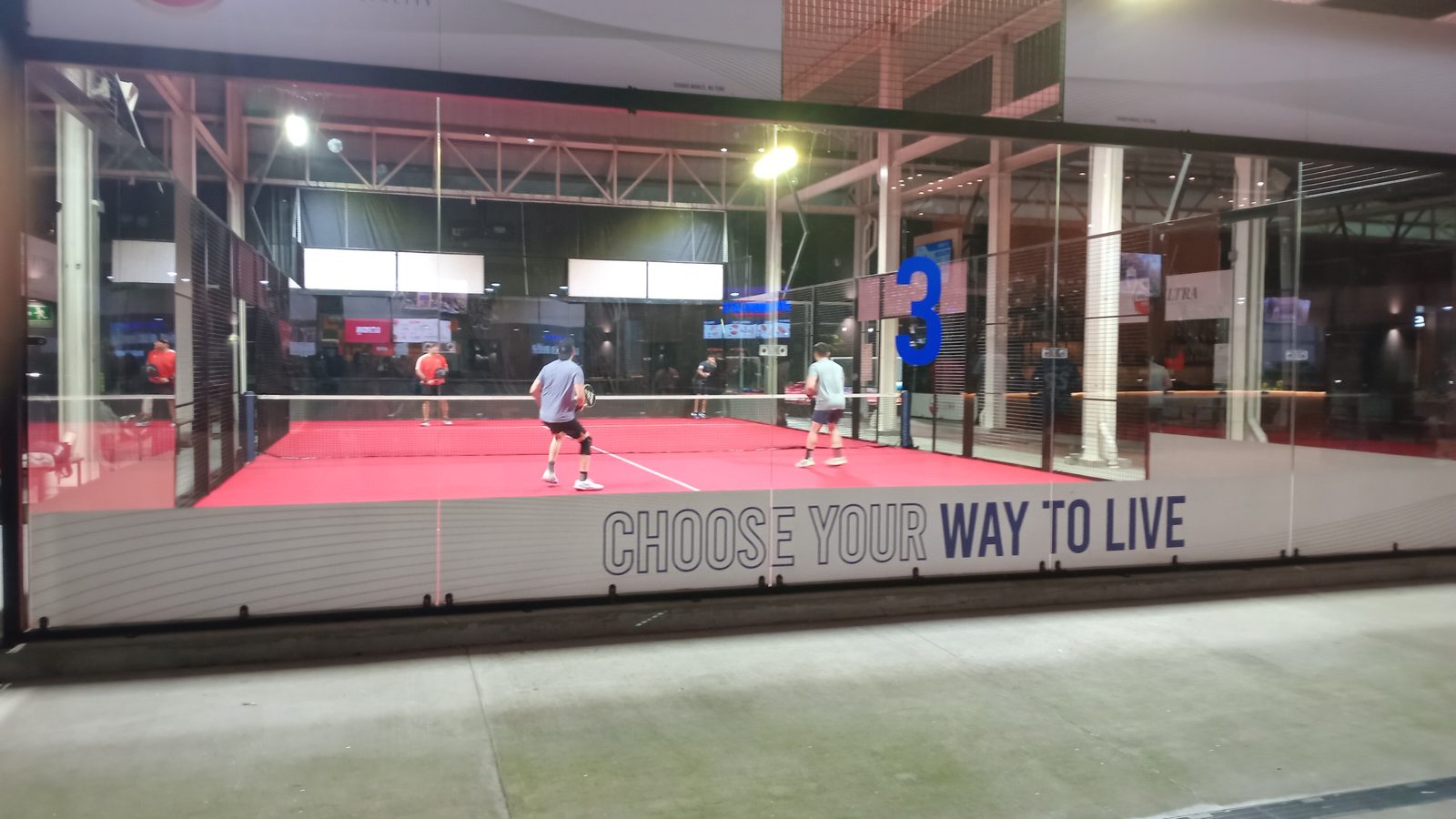
The court is the same. The conditions are not
An indoor padel court is not a different product from an outdoor one. Both use the same 20 by 10 metre enclosed playing area, the same glass back walls and mesh side panels, and the same rules about when the ball may come off a wall. Our guide to padel court surfaces and walls covers the construction in detail. What differs is everything around the court: the air, the light, the temperature of the ball and the state of the glass.
That matters more in padel than in many racket sports because so much of the game happens off the walls. A point often depends on reading how a ball will come off the back glass, and that rebound changes with the ball’s pressure, the felt, any moisture on the glass and the wind carrying the ball in. Indoors, those inputs barely move between sessions. Outdoors, they can change within a single 90-minute booking as the sun goes down.
What changes outdoors, factor by factor
| Factor | Indoor court | Outdoor court |
|---|---|---|
| Ball speed | Steady from session to session | Livelier in heat, slower and lower in cold |
| Wind | None | Moves lobs, serves and high balls off the glass |
| Light | Artificial, even if well installed | Sun and glare by day, floodlights at night |
| Walls and turf | Dry; turf wears slowly | Dew, rain and dust change rebounds and grip |
| Ball and shoe wear | Slower | Faster on abrasive, exposed turf |
| Cancellations | Rare | Rain, storms and extreme heat |
Heat and cold change the ball
Most match balls are pressurized, and the air inside them behaves like any gas: warm it and the ball gets firmer and bouncier, cool it and the ball goes heavier and lower. On a hot outdoor afternoon, a fresh can plays fast and the ball comes off the back glass with more pace, so defending from the back gets harder and smashes that would die indoors start reaching the fence. On a cold morning the same ball sits down, rallies get longer and it is harder to finish the point overhead.
Our padel ball guide explains the FIP bounce test (approved balls must bounce 135 to 145 cm when dropped from 254 cm onto a hard surface) and why a separate, lower-bounce ball exists for courts above 800 metres. Temperature works in a similar direction to altitude: it changes how lively any given ball feels. If you play both indoors and outdoors, keep separate cans, because a ball broken in on gritty outdoor turf will not behave like a fresh one under a roof.
Wind turns the lob into a gamble
The lob is the most important shot in padel, and it is the one wind affects most. A lob into a headwind can fall short and get smashed; with the wind behind you it can sail over the back glass entirely. Serves and the high balls that come off the back wall drift too. Outdoor players learn to lob lower and with more margin on gusty days, and to aim at the side with the wind pushing the ball into the court. Indoors, you can trust the same lob every time, which is one reason indoor courts are easier for learning the shot in the first place. Our guide to padel shots covers the lob, bandeja and vibora.
Sun, glare and lights
Overheads are where outdoor light bites. Looking up into a low sun for a smash or a bandeja is a real handicap, and it is why the official rules address orientation. For outdoor facilities, FIP-based rules recommend running the court’s long axis north to south, with leeway between north-northeast and north-northwest, so the low morning and evening sun comes across the court rather than straight into one end. A cap or visor helps on day sessions; our guide on what to wear for padel has the weather checklist.
Indoor courts trade sun for floodlights. The same rules set a minimum of 6 metres from the ground to the lower part of the light projectors, with 8 metres suggested for new facilities where lights are mounted over the court, and they ask for uniform lighting that does not create visibility problems. A well-lit hall is easy; a low or patchy one leaves dark spots on high lobs. If a club’s photos show lights hanging low over the court, that is worth noticing before you buy a membership.
Moisture, dust and footing
Outdoor glass picks up dew in the morning and condensation on humid evenings. A damp wall grabs the ball and sends it down sooner, and wet turf feels slicker underfoot even with sand infill. Dust and leaves change the surface the other way. None of this is a problem indoors. It is also why most clubs stop outdoor play in steady rain: wet glass and a soaked ball make the walls unpredictable, and slipping during a lateral move is how ankle and knee injuries happen.
Our directory shows indoor or outdoor status for each club where we have confirmed it, plus court counts and booking links.
Indoor vs outdoor in US clubs: what our directory shows
We checked the indoor or outdoor status of every club in the PadelAnywhere directory against the club’s own site or booking page. As of November 14, 2026, the directory has 34 verified clubs:
| Status | Clubs | Examples in our listings |
|---|---|---|
| Indoor | 15 | Union Padel Club (Chicago), Padel Haus Dumbo (Brooklyn), Cube Padel (Houston) |
| Outdoor | 11 | Wynwood Padel Club (Miami) and most of our Los Angeles listings |
| Both | 4 | Padel Club Austin, Casa de Padel HTX, Padel Haus Williamsburg |
| Not yet confirmed | 4 | Shown as unconfirmed on the club card |
The split follows the weather. Our Chicago listings are indoor or unconfirmed, with no outdoor-only club. All three Dallas-area listings are indoor. Houston has one of each: an indoor hall, a club with both indoor and outdoor courts, and an outdoor club, which makes sense in a city where summer heat and humidity can make midday outdoor play miserable. Los Angeles goes the other way: four of the five LA-area clubs in our listings are outdoor. Miami and Phoenix are split. City pages for Chicago, Houston and Los Angeles show the individual clubs.
Two caveats. This is our directory, not every padel court in the US, and clubs add roofs, open new halls and close courts often. Treat the counts as a snapshot and check the club itself before you plan a season around it.
Which should you choose?
Choose indoor if…
- You are new to padel. Consistent conditions make it much easier to learn how the ball comes off the glass. Our beginner lessons guide covers what a first clinic looks like.
- You live somewhere with hard winters or brutal summers, and you want a booking that will not get rained out.
- You play mostly after work, when an outdoor court would be under floodlights anyway.
- You are paying for a membership and want to use it year-round.
Choose outdoor if…
- You live in a mild or warm climate where the best clubs near you are open-air.
- You enjoy playing in the fresh air and do not mind adapting to wind and sun.
- You want to sharpen lobs, defense and shot selection in changing conditions; outdoor players often find indoor play feels easier afterward.
- You are traveling somewhere padel is mostly played outdoors and want to be ready for it.
Many players end up doing both: indoor courts in the off-season and outdoor courts when the weather turns. If your club has mixed courts, booking the indoor court for a lesson and the outdoor one for social games is a reasonable split.
What to pack for each
Indoors: court shoes, your racket, a fresh can if the club does not supply balls, water and a dry layer. Halls with strong air conditioning can feel cold between games. Anti-fog matters if you wear protective eyewear; see our padel eye protection guide.
Outdoors: everything above, plus sunscreen, a cap or visor, more water than you think and a spare shirt. Keep a separate can of balls for outdoor play, and check soles more often, because abrasive turf wears them faster. Our padel shoe guide explains which sole patterns grip on sand-filled turf, and the best padel shoes list compares current options.
Your racket does not need to change. Some players prefer a slightly softer, more forgiving racket for cold outdoor sessions when the ball feels dead, and a more controlled one in heat when everything flies, but that is fine tuning, not a requirement. Our guide to racket weight and balance explains the trade-offs.
Frequently asked questions
Is padel better indoors or outdoors?
Neither is better for everyone. Indoor courts give you the same conditions every session: no wind, no sun in your eyes on overheads and no rain cancellations, which makes them the easier place to learn and the more reliable booking in very hot or cold months. Outdoor courts are often the only option in warm-climate cities, play livelier in heat, and many players simply like the open air. Pick the one that matches your climate and how often weather would cancel your games.
Does the ball play differently on outdoor padel courts?
Yes. A pressurized ball gets livelier as it warms up and slower when it is cold, so the same can feels different in a summer afternoon match and a winter morning one. Outdoor turf is also more abrasive and exposed to dust and moisture, which wears the felt faster. Wind moves lobs and the serve, and damp glass changes how the ball comes off the walls. Indoors, those variables mostly disappear.
How many US padel clubs are indoor?
In our directory of 34 verified US clubs, 15 are listed as indoor, 11 as outdoor and 4 as having both indoor and outdoor courts; 4 more have no confirmed indoor or outdoor status yet. Chicago and Dallas-area clubs in our listings are indoor or unconfirmed, while Los Angeles listings lean outdoor. That is our directory, not a census of every club in the country.
Do I need different shoes for indoor and outdoor padel?
Usually not. Most US indoor and outdoor padel courts use artificial turf with sand infill, so the same padel or omni/clay-style sole works on both. What changes is wear and grip: abrasive outdoor turf wears soles faster, and a wet or dusty outdoor court can feel slicker. If you mainly play indoors, a shoe will last longer.
What do FIP rules say about outdoor padel court orientation?
For outdoor facilities, the rules recommend running the long axis of the court north to south, with some leeway between north-northeast and north-northwest. That keeps the low sun out of players’ eyes at the ends of the day. The rules also set a minimum of 6 metres from the ground to the bottom of the light projectors, with 8 metres suggested for new facilities when lights sit over the court.
Can you play padel outdoors in the rain?
Not safely in steady rain. Wet glass, wet turf and a soaked ball make the walls unpredictable and footing slippery, and most clubs close outdoor courts or move bookings when it rains. Light drizzle on a well-drained court is a club-by-club call. Check the club’s weather and cancellation policy when you book an outdoor court.
Find a padel club near you, filter by state and city, and check whether it is indoor, outdoor or both before you book.
Sources
- Padel Federation of Ireland, “Lighting & Orientation,” summary of the 2026 padel rules (padelfederation.ie), checked November 14, 2026.
- International Padel Federation (FIP), Rules of Padel and ball approval figures as cited in our padel ball guide.
- PadelAnywhere club directory, indoor/outdoor status on file for 34 verified clubs as of November 14, 2026. Counts reflect our listings, not every US club.
- Club rules on weather closures and cancellations are set by each club. The club’s own policy is what counts.
Last updated November 14, 2026.