Padel in cold weather: what changes and how to play through winter
A cold morning on an outdoor court plays like a different sport: the ball sits down, the racket feels harder and the turf stays damp. Here is what is actually going on, how much it matters, and what to do about it.
You can play padel in the cold, but expect a slower, lower ball and a harder-feeling racket. Cold gas inside a pressurized ball pushes out less, and cold rubber is less springy. In a published tennis-ball experiment, cooling the ball from about 20°C to about 5°C cut its rebound height by roughly a fifth. Keep balls and rackets at room temperature until you play, open a fresh can, dress in layers, warm up longer, stand a little closer to the back glass, and skip the session if the turf is icy. If you want normal bounce all winter, book an indoor court.
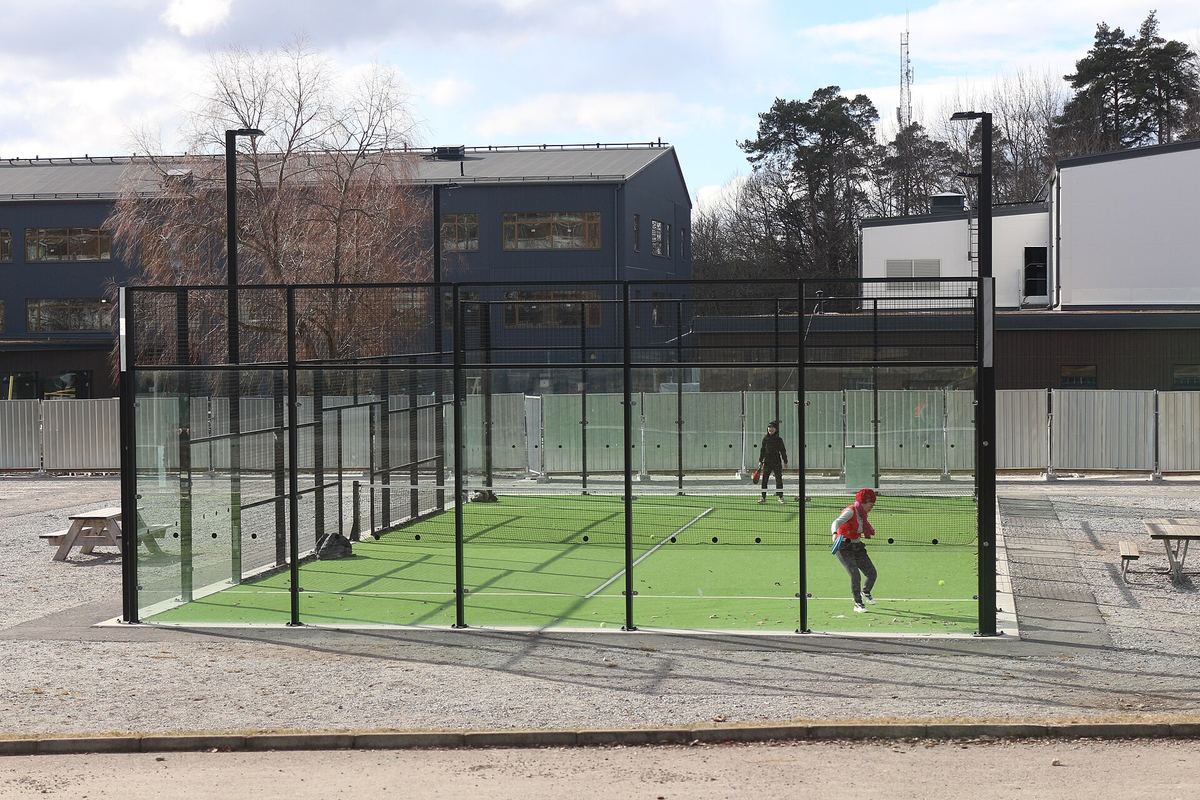
What cold does to a padel ball
A match padel ball is a rubber shell filled with gas under pressure, covered in felt. Under International Padel Federation rules, an approved ball has to rebound between 135 and 145 cm when dropped from 254 cm onto a hard surface. That test assumes normal conditions. On a cold court, two things pull the bounce down.
- The gas inside pushes out less. Gas pressure rises and falls with absolute temperature. The outside air pressure doesn’t change when it gets cold, so the drop comes straight out of the small margin of extra pressure that gives the ball its bounce.
- The rubber gets stiffer and loses more energy. Cold rubber is less springy, so more of each impact turns into heat instead of rebound.
- Damp felt adds weight. In autumn and winter, outdoor turf and glass often stay wet. Felt that picks up water makes the ball heavier and duller off the walls.
How big is the effect?
We haven’t found a published study that measures padel balls at different temperatures. The closest is a 2022 paper by physicists Martin Allen and Bruce Allen, who dropped a tennis ball (the same pressurized, gas-filled design) at temperatures from about −20°C to 80°C and measured how much bounce it kept.
| Ball temperature | Coefficient of restitution (measured) | Rebound height vs 20°C (our calculation) |
|---|---|---|
| 293 K (about 20°C) | 0.704 | Baseline |
| 278 K (about 5°C) | 0.629 | About 20% lower |
| 274 K (about 1°C) | 0.621 | About 22% lower |
| 251 K (about −22°C) | 0.447 | About 60% lower |
Rebound height scales with the square of the coefficient of restitution, which is how we got the last column. It was one tennis ball in a home experiment, not a padel ball in a lab, so read it as the size of the effect rather than a spec. Still, a fifth less bounce on a 5°C morning is easy to feel, and it means a perfectly good can can play like a dead one.
Cold ball or dead ball?
The two feel the same on court but aren’t the same problem. The bounce lost to cold gas comes back when the ball warms up. The bounce lost to a can that has been open for weeks doesn’t. A quick test: if a ball that has been in your pocket or a warm bag for a few minutes still bounces low next to a fresh one, it’s finished. Our padel ball guide covers how fast a can goes flat and how to tell.
Keep your balls warm
- Store cans indoors, not in the car. A can that spent the night in a cold car starts the session already low.
- Bring them out warm. Keep the can in your bag until you start, and rotate balls through a jacket pocket between points if the session is long.
- Open a fresh can more often. Winter exaggerates every bit of lost pressure, so a can that is fine in July can feel dead in December.
- Keep spares dry. Swap out balls that have soaked up water from wet turf.
- Store opened balls under pressure, indoors. A pressurizer tube slows the leak between sessions; makers such as TuboPlus say to keep the tube itself warm in winter. See our padel ball pressurizers comparison.
Pressureless training balls don’t rely on internal gas pressure in the same way, so they don’t lose that part of their bounce in the cold, but their rubber still stiffens. They also start softer, so they won’t fix a sluggish winter game on their own. For match balls worth carrying through winter, see our best padel balls list.
Indoor courts keep the bounce close to normal and take frost and rain out of the picture, but they fill up early in winter. Use our directory to find indoor and covered clubs near you.
What cold does to your racket
Most padel rackets are a carbon or fiberglass face over an EVA or foam core. Polymer foams get stiffer as they cool, so many players find a racket feels harder, louder and less lively on a cold morning, and off-center hits sting more. Combined with a ball that isn’t coming off the face as fast, it’s why winter padel feels like hard work.
One cold session isn’t what damages a racket. Long exposure is. STARVIE’s warranty, for example, excludes “prolonged exposure of the paddle to extreme temperature or humidity conditions that affect its technical characteristics,” along with impact damage. Other brands’ terms differ, so check yours, but the safe habits are the same:
- Don’t leave the racket in the car overnight, in winter or summer.
- Let it come up to room temperature before a hard session, rather than taking it straight from a freezing trunk.
- Dry it if it gets wet, and don’t put it on a radiator. A bag with a thermal racket compartment helps; our guide on how to choose a padel bag explains what that lining does.
- Cold, stiff frames and hard hits against the glass are a bad mix. Be careful with low, scraping shots off the wall.
What to wear for winter padel
Padel warms you up fast once rallies start, then cools you down quickly at changeovers. Dress so you can add and remove layers easily.
- Base layer: a moisture-wicking long-sleeve top, not cotton, which stays wet and cold.
- Mid layer: a light fleece or quarter-zip for the warm-up and slower doubles sessions.
- Outer layer: a windproof jacket you take off once you’re moving and put back on between sets.
- Legs: full-length leggings or track pants that don’t restrict a deep lunge.
- Head and hands: a thin hat for the warm-up. If you use gloves, make sure they don’t change how you hold the grip; a fresh overgrip often helps more.
- Feet: clean outsoles with a pattern meant for padel turf. Worn soles on damp turf are how ankles get rolled.
Pack a dry top for afterward. Our guide to what to wear to play padel covers fabrics and shoes in more detail.
How to adjust your game in the cold
- Warm up longer. Give yourself extra time at the net and on easy rallies before you go for big shots. Cold muscles and a cold ball both need it.
- Stand closer to the back glass. The ball dies sooner after the bounce and comes off the wall with less pace, so give it less room than you would in summer.
- Expect longer, slower points. Smashes that would leave the court in summer often stay in, and volleys sit up less. Patience beats power.
- Lob more carefully. A lower bounce off the back wall gives opponents less time, but a short lob is easier to put away when the ball isn’t flying.
- Use the walls more. Low, slower balls off the side glass are harder to attack when the bounce is flat.
When to call it off
Cold alone is rarely the reason to stop. Footing is. Padel turf is usually sand-filled artificial grass, and frost, standing water or wet leaves on it can make sudden stops and lunges risky. Glass that is wet or fogged also changes how the ball comes off it. Most clubs close outdoor courts when they are icy; if yours doesn’t, make the call yourself. If a session goes ahead in very cold conditions, keep it shorter, keep moving between points and stop if you are struggling to feel your hands or feet.
Short days are the other winter limit. If you play after work on an outdoor court, check that it is lit before you book, and our indoor vs outdoor padel guide covers the lighting and wet-glass issues in more detail.
Want a consistent bounce all winter? Clubs with indoor courts in our directory include Union Padel Club (Chicago), Padel Haus Dumbo (Brooklyn) and Cube Padel (Houston). Check each club’s own booking page for current hours and court times.
Frequently asked questions
Can you play padel in cold weather?
Yes. Outdoor padel is played through the winter in many places, and the rules do not change with temperature. What changes is the ball, which bounces lower and plays slower, the racket, which can feel harder, and the court, which can stay damp or freeze. Wet or icy turf is the real reason to call off a session, not the cold itself.
Why do padel balls bounce less in the cold?
A pressurized padel ball is a rubber shell filled with gas. As the gas cools, its pressure falls, and the rubber also gets less springy. In a 2022 home experiment on a tennis ball, which works the same way, physicists Martin Allen and Bruce Allen measured a coefficient of restitution of 0.704 at about 20°C and 0.629 at about 5°C. Since rebound height scales with the square of that number, that is roughly a fifth less bounce. Nobody has published the same test for padel balls, so treat it as a guide to the size of the effect.
Do cold padel balls recover when they warm up?
The part caused by cold gas does, because pressure rises again with temperature. That is why keeping a can at room temperature until you play makes a difference. What does not come back is pressure a ball has already lost through use and age. If a warm ball still bounces low, the can is finished, not cold.
Can cold weather damage a padel racket?
A single cold session is not usually the problem. Rackets are carbon or fiberglass faces over an EVA or foam core, and foams stiffen as they cool, so a cold racket feels harder and can be less forgiving off-center. Prolonged exposure is a different matter: STARVIE, for example, says its warranty does not cover prolonged exposure of the racket to extreme temperature or humidity that affects its technical characteristics. Do not store a racket in a car overnight in winter.
What should I wear to play padel in winter?
Layers you can take off as you warm up: a moisture-wicking base layer, a light fleece or long-sleeve top, and a windproof jacket for the warm-up and changeovers, plus full-length leggings or track pants. Keep a hat and dry spare top in your bag. Shoes with a grip pattern suited to sand-filled turf matter more than ever when the court is damp.
Is it better to play indoor padel in winter?
If you want consistent conditions, yes. Indoor courts take wind, rain, frost and short daylight out of the equation, and the ball plays closer to its normal bounce in a heated hall. They also book up fast in winter, so reserve early. Outdoor winter padel is still a good game; it is just slower, lower and more about patience.
Last updated November 17, 2026. General playing and equipment information, not medical advice.
Sources
- Allen M, Allen B. “Temperature dependence of energy loss in gas-filled bouncing balls.” arXiv:2202.03034 (physics.ed-ph), February 2022, Table I.
- International Padel Federation (FIP), Rules of the Game, ball specifications (rebound 135–145 cm from 254 cm).
- STARVIE, “Padel product warranties” (starvie.com), checked November 2026.