Padel for seniors and over-50 players: how to start and stay on court
Padel has a reputation as the racquet sport you can still pick up at 55 or 65. Some of that is deserved and some needs a little care. Here is what makes the game approachable for older players, what injuries senior players actually report, and how to set yourself up to keep playing.
Padel is a realistic sport to take up or keep playing after 50. The court is smaller than a tennis court, the serve is underhand, it is played in doubles and the walls give you a second chance at the ball. It is not risk-free: in a survey of 131 senior padel players aged 50 to 66, the elbow, lower back, knee, calf and shoulder were the most commonly injured areas. Start with a lesson, warm up properly, play short sessions at first, wear shoes made for the court surface, choose a racket that is easy to control, and check with your doctor first if you have a heart, joint or balance problem.
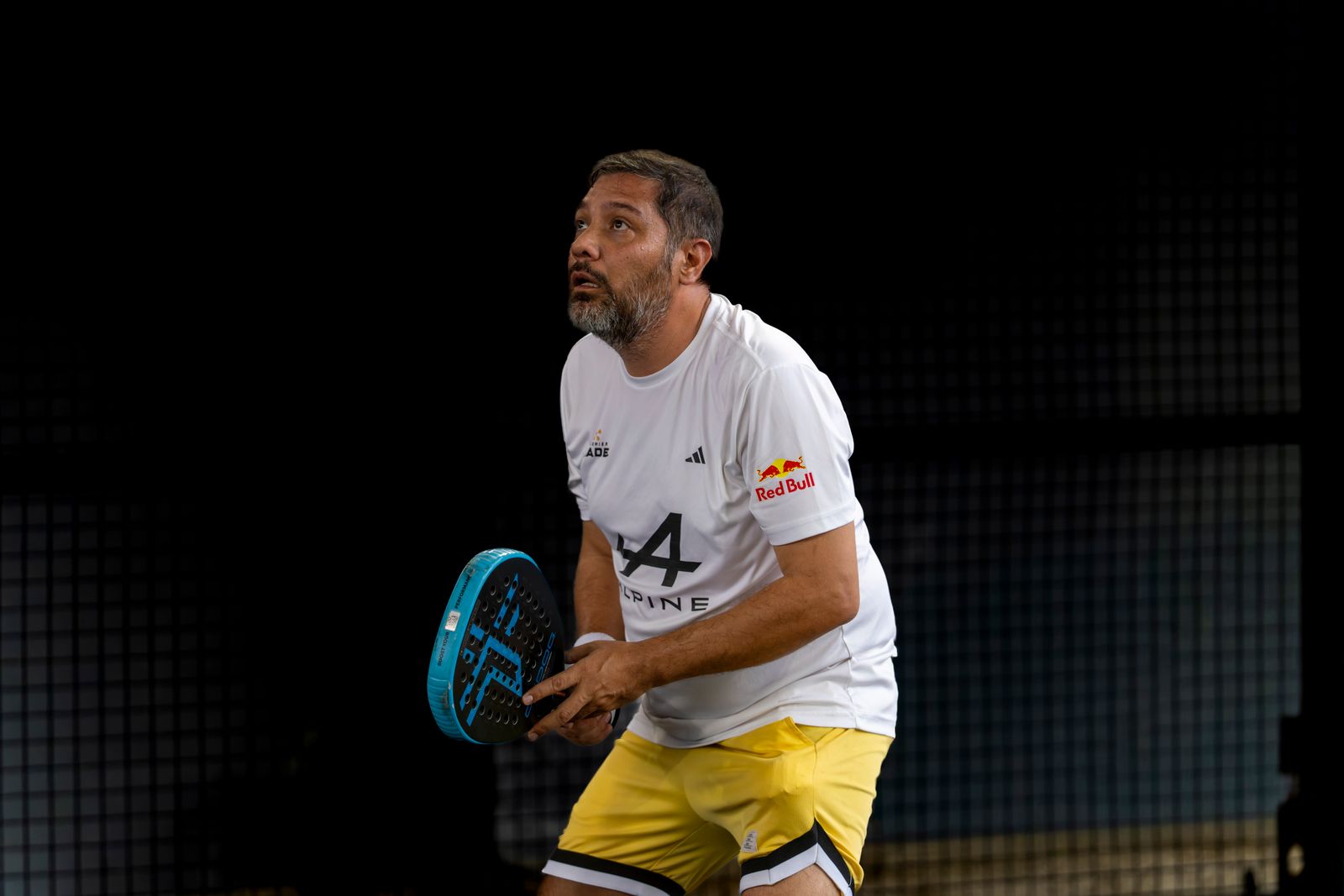
Why padel suits many older players
Padel is not a gentle sport, but several features of the game lower the barrier to entry compared with other racquet sports. They come straight from how the game is set up rather than from anything special about older players.
- A smaller court. A regulation padel court is 20 m long and 10 m wide, enclosed by walls and mesh, and it is shared by four players. There is simply less ground to cover per person than on a tennis court.
- An underhand serve. Under the rules of the game the ball is bounced and struck at or below waist height. There is no overhead service motion, which takes a lot of strain off the shoulder at the start of every point.
- Walls that keep the ball in play. A ball that gets past you can still be played after it comes off the back or side glass. That gives you more time, keeps rallies going and means you do not have to sprint for every ball. Our guide to playing off the back wall covers the footwork.
- Doubles by default. Almost all padel is played two against two, so the court is split and the game is social. Many clubs run mixed-level social sessions where you rotate partners.
- A short learning curve to a fun rally. Short, solid-faced rackets, a compact court and the walls make it easier to keep the ball going early on, so a first lesson usually gets you into real rallies quickly.
None of this makes padel a substitute for medical advice or a guaranteed route to better health. Public health guidance is broader than any one sport: the US Centers for Disease Control and Prevention (CDC) recommends that adults 65 and older get at least 150 minutes of moderate-intensity activity a week, do muscle-strengthening activities on at least two days, and do activities that improve balance. A weekly padel game can be one part of that mix, alongside strength and balance work off the court.
What injuries senior padel players report
The best data we have found on older padel players comes from a 2015 study by R. Castillo-Lozano and colleagues, published in the Revista Andaluza de Medicina del Deporte. The researchers surveyed 131 active senior padel players (107 men and 24 women) aged 50 to 66, with an average age of 56.8, about the injuries they had had.
| Injured area | Share of players reporting it | Typical pattern in the study |
|---|---|---|
| Elbow | 29.8% | Overuse, mainly lateral epicondylitis (tennis elbow) |
| Lower back | 27.5% | Back pain linked to play |
| Knee | 22.9% | Mostly acute, such as sprains |
| Calf (“tennis leg”) | 22.1% | Acute calf muscle injury |
| Shoulder | 20.6% | Overuse shoulder pain |
The percentages add up to more than 100 because many players reported more than one injury. Two patterns stand out. Injuries to the legs tended to be sudden: a twisted knee or a calf that goes during a quick push-off. Injuries to the arm tended to build up over time, with the elbow and shoulder wearing down from repeated strokes. The authors named age, laterality (which arm a player uses) and body mass index as the main risk factors.
It is one survey of players in one country, based on what players remembered, so read the numbers as a picture of where problems show up rather than as odds for any individual. For a broader look at the injuries padel players of all ages report, see our guide to padel injuries and how to avoid them.
Lowering your risk on court
The study’s authors pointed to prevention strategies built around warm-up, conditioning and equipment. Here is how that translates to a normal club session. If you have a specific injury or medical condition, a physiotherapist or doctor who knows your history should have the final word.
Warm up like you mean it
Calf and knee injuries in the study tended to happen suddenly, and sudden injuries are most likely when you go from the car park to a full-speed rally. Spend ten minutes or so on easy movement first: brisk walking or light jogging around the court, side steps and lunges, gentle calf raises, arm circles, then short, easy rallies at the net before anyone starts smashing. In winter, give it longer; our guide to padel in cold weather covers playing outdoors when it is cold.
Build up session length gradually
Overuse injuries to the elbow and shoulder come from too many strokes too soon. If you are new or coming back after a break, start with an hour once or twice a week rather than back-to-back sessions, and add time as your body adapts. Soreness that lasts days, or pain on the outside of the elbow when you grip something, is a reason to ease off and get it looked at rather than strap it up and keep going.
Strength and balance off the court
A lot of padel happens on one leg, during a lunge or a quick change of direction. Leg strength, calf strength, a stable trunk and decent balance all help. This is also where the CDC’s advice for older adults on muscle strengthening and balance activities fits in. Our padel fitness and conditioning guide has exercises you can start with.
Technique protects the elbow and shoulder
Gripping the racket too tightly, hitting late with a bent wrist and swinging hard at every overhead all load the arm. A few lessons on the continental grip, early preparation and using the walls instead of forcing winners will do more for a sore elbow than any gadget. See how to hold a padel racket.
Many clubs run beginner clinics and social sessions where you can borrow a racket and play with people at your level. Find a club near you, then check its own site or booking app for current clinics and court times.
Gear that makes the game easier
Racket: control first
We are not going to name a “best racket for seniors” here, because no one has tested rackets on older players in a way that would back up a ranking. What we can describe is how the main specs change the feel:
- Shape. Round rackets put the sweet spot lower and closer to the hand, which is more forgiving off-center. Diamond shapes move weight toward the head for power but punish mishits. Teardrop sits in between. See padel racket shapes explained.
- Balance and weight. A head-heavy racket feels more powerful but takes more effort to swing and stop. A lower balance point is easier on the arm for many players. Our guide to padel racket weight and balance explains what the numbers on the frame mean.
- Core feel. Softer cores absorb more of the impact; harder cores give more pop but transmit more vibration. If your elbow is already sore, read choosing a padel racket for tennis elbow.
The simplest test is to borrow or rent rackets at a club and see which one you can still swing comfortably at the end of an hour.
Shoes made for the surface
Most padel courts are artificial turf filled with sand. Running shoes slide on it, and the knee and calf injuries in the senior study were mostly the sudden kind that bad footing invites. Padel or clay-court shoes with a herringbone or mixed sole grip the turf without sticking. Our guide to choosing padel shoes covers soles and fit.
Eye protection
In padel all four players are close together in an enclosed court and the ball comes off glass at odd angles, and eye injuries do happen at the recreational level. Wraparound sports eyewear rated for racquet sports is worth considering, especially if you already have an eye condition. See padel eye protection.
Getting started after 50
- Check in with your doctor if you need to. If you have heart disease, high blood pressure, a joint replacement, osteoporosis, balance problems or a recent injury, ask whether a fast doubles game is a good idea and what to watch for.
- Book a lesson or clinic. One or two coached sessions teach you the grip, the serve and how to use the walls, and they help you avoid the habits that load the elbow. Our beginner lessons guide explains clinics vs private lessons.
- Find your level honestly. Playing with people far stronger than you means more lunging and stretching for balls you cannot reach. The padel levels guide explains the common rating scales.
- Try social formats. Americano and Mexicano sessions rotate partners and keep games short, which makes them a relaxed way to meet players at your level. See Americano and Mexicano formats.
- Consider indoor courts. Indoor courts take heat, glare, wind and wet turf out of the picture, and that wet turf is a slip risk. See indoor vs outdoor padel.
Senior padel competition
If you get hooked, there is a competitive pathway. The International Padel Federation’s Senior World Cup is a team event between national federations. FIP announced that the 2026 edition would be held in Buenos Aires from September 14 to 19, 2026, with 32 teams and five age categories:
| FIP Senior World Cup 2026 categories | Previous editions |
|---|---|
| 40+, 45+, 50+, 55+, 60+ | Estepona, Spain (2018); Las Vegas, USA (2022); La Nucía, Spain (2024) |
For most players, competition means something much closer to home: club ladders, league nights and local tournaments with level-based divisions. Our guide on how to enter a padel tournament explains how US events are organized and what to bring to your first draw.
The easiest way to find out whether padel suits you is to get on a court. Browse clubs in our directory by state, then look for a beginner clinic or a social session at a level that matches yours.
Frequently asked questions
Is padel a good sport for people over 50?
For many people it is one of the easier racquet sports to pick up later in life. The court is smaller than a tennis court, the serve is hit underhand at or below waist height, it is almost always played as doubles, and the walls keep the ball in play so rallies last longer. That said, it still involves quick starts, stops and overhead shots, so anyone with a heart condition, joint problem or recent injury should check with their doctor before starting.
Is it too late to start padel at 60 or 70?
There is no upper age limit in the rules, and the International Padel Federation runs senior world championships with categories that go up to 60 and over. What matters more than age is starting gradually: a beginner lesson or clinic, short sessions at first, a proper warm-up, and partners at a similar level. Our levels guide explains how to find an honest starting point.
What are the most common padel injuries in older players?
In a 2015 survey of 131 active senior padel players aged 50 to 66, published in the Revista Andaluza de Medicina del Deporte, the most commonly injured areas were the elbow (29.8%), lower back (27.5%), knee (22.9%), the calf injury known as tennis leg (22.1%) and the shoulder (20.6%). Leg injuries tended to be sudden ones such as sprains, while elbow and shoulder problems were more often overuse injuries. Age, which arm a player uses and body mass index were the main risk factors the authors identified.
What padel racket is best for an older beginner?
There is no single best model, and we do not rank rackets for this page. As a general starting point, many coaches steer newer players toward a round or teardrop shape with a lower balance point, which is easier to control, and toward a racket that does not feel heavy at the end of a session. If you already have a sore elbow, see our guide to padel rackets for tennis elbow, and try rackets at a club before buying.
Is padel easier on the joints than tennis?
Padel is often described as more accessible than tennis because the court is smaller and points are shorter, but we have not found good research directly comparing joint load between the two sports. The senior padel survey above shows that knee, calf, back, elbow and shoulder injuries still happen. Good shoes for the court surface, a warm-up and sensible session length matter regardless of which sport you choose.
Are there senior padel tournaments?
Yes. The International Padel Federation (FIP) runs a Senior World Cup. Its 2026 edition was held in Buenos Aires from September 14 to 19 with 32 national teams, in 40+, 45+, 50+, 55+ and 60+ categories. Previous editions were held in Estepona (2018), Las Vegas (2022) and La Nucía (2024). Most older players never go near an international event, though. Club leagues, social Americano nights and local tournaments with age or level divisions are where most senior padel is played.
Last updated November 21, 2026. General information about the sport, not medical advice. Talk to a doctor or physiotherapist about your own health before starting a new sport.
Sources
- Castillo-Lozano R, et al. “Epidemiology and prevention strategies for the musculoskeletal injuries in the paddle-tennis senior players.” Revista Andaluza de Medicina del Deporte, 2015;8(4).
- International Padel Federation (FIP), Rules of the Game: court dimensions and service.
- International Padel Federation (FIP), announcement of the 2026 Senior World Cup in Buenos Aires, April 2026.
- US Centers for Disease Control and Prevention, “Older Adult Activity: An Overview” (physical activity guidelines for adults 65 and older), checked November 2026.